
The legend of the Countess
Countess Siffridina really existed: she governed Caserta in the thirteenth century, lost everything with the fall of the Swabians and died a prisoner in the castle of Trani, on the sea, on the other side of the Kingdom. Here in the village it is said that she came back. The house bears her name, and this is her story.


861
A village on the height
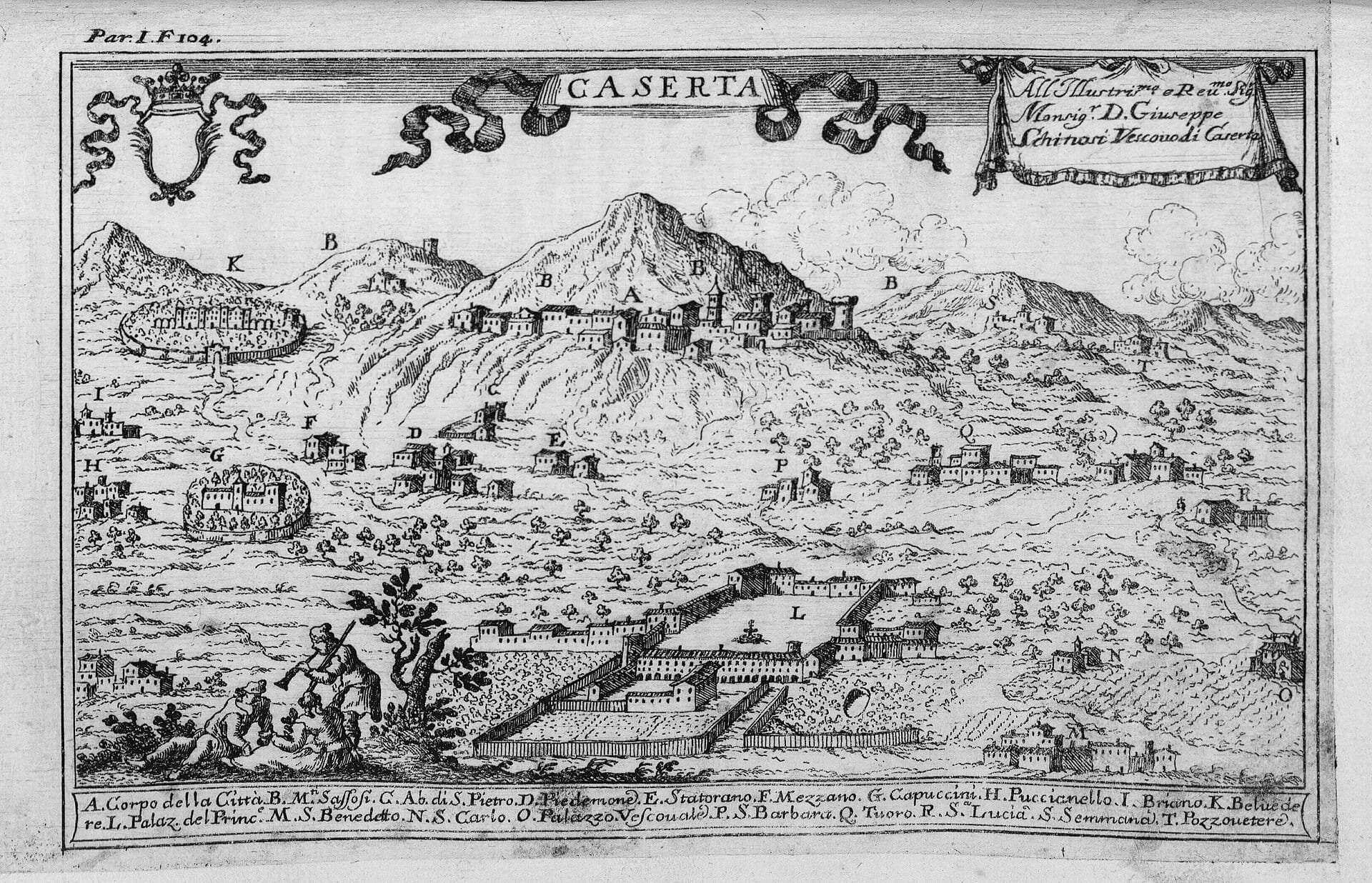
Before it was called Casertavecchia this place was called Casa Hirta, the village on the height: a monk, Erchempert, writes it in his account of the events of 861, when it was a handful of Lombard houses on the slopes of the Tifatini hills, four hundred metres above the sea. In 1062 the Normans arrived, and within a century the village became a town: the Cathedral was begun around 1113 and dedicated in 1153 to St Michael the Archangel, the bell tower went up in 1234, and above the houses the counts of Caserta built their castle.
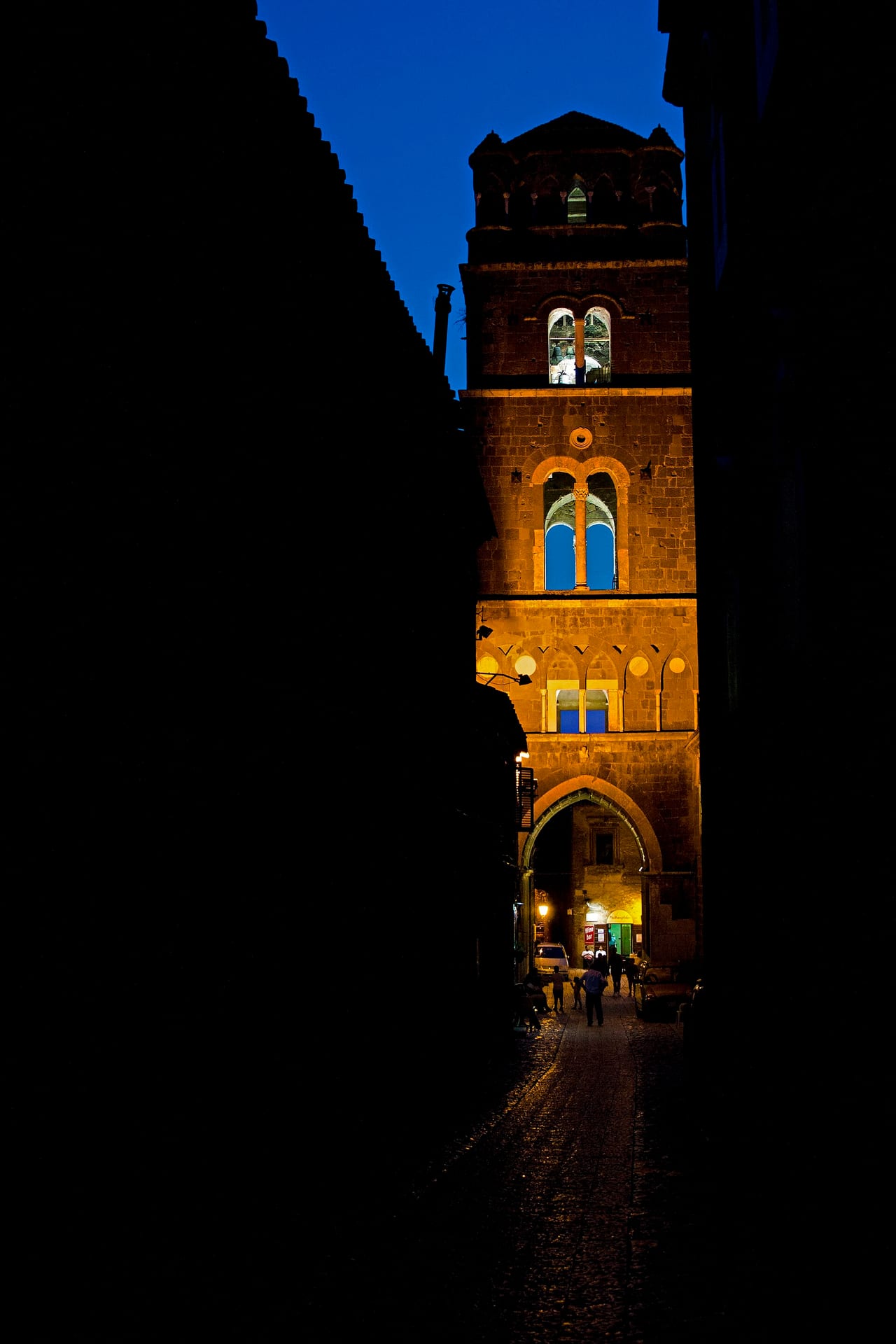
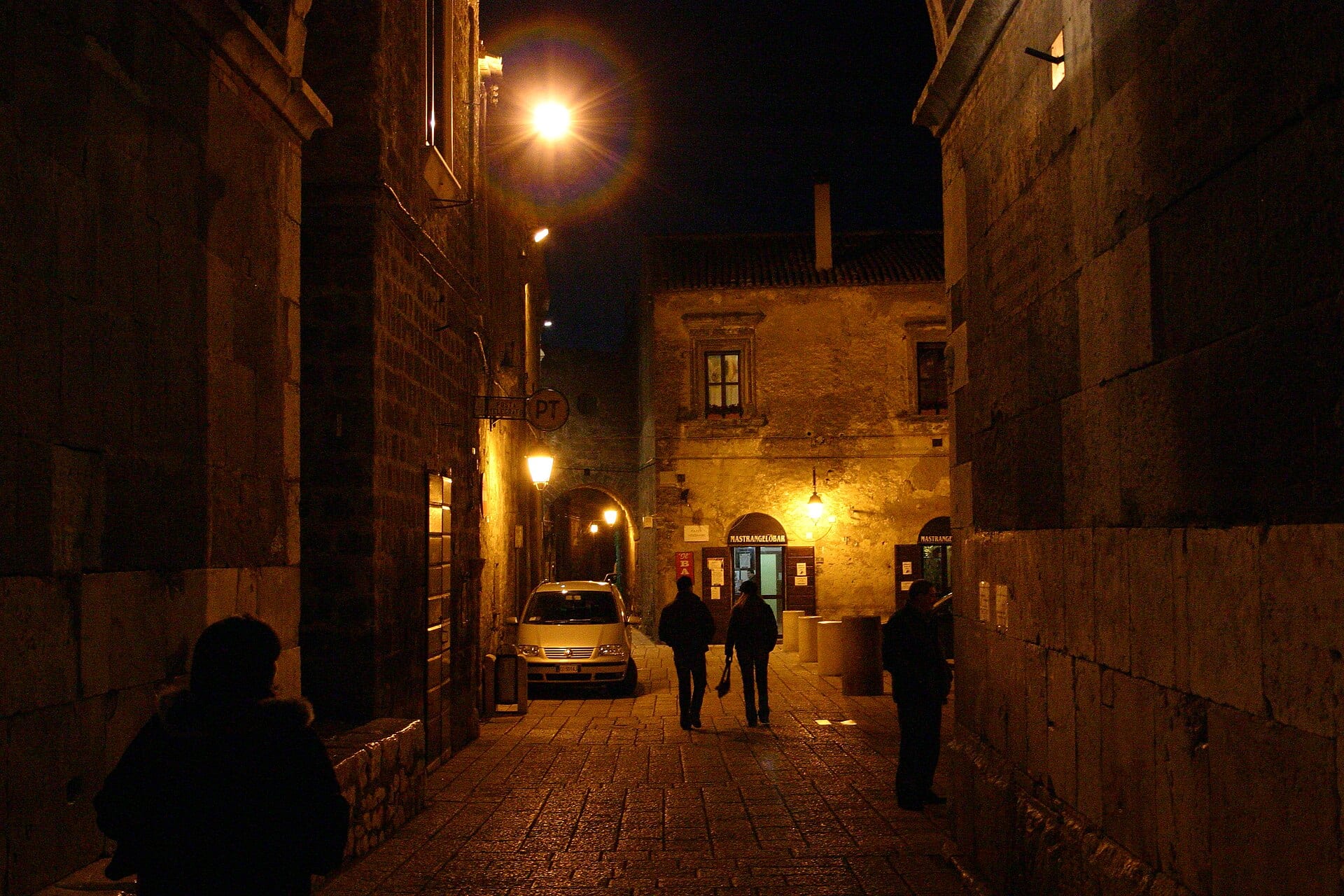
Since then life has moved little by little down to the plain, and nothing more has been built up here: the houses, the steep lanes and the keep are still those of the thirteenth century, and at night, with the few lights there are, you can see it.

1224–1251
The countess
Siffridina is not an invention. She was the wife of Count Tommaso, and of what family she came we do not know. In 1224 the emperor Frederick II drove her husband out of the Kingdom and kept their son, Riccardo, a child, as a hostage. The county was left to her. She governed it for years, at a time when power passed from father to son and a woman alone was an anomaly; in 1232 the documents show mother and son together at the head of the county.
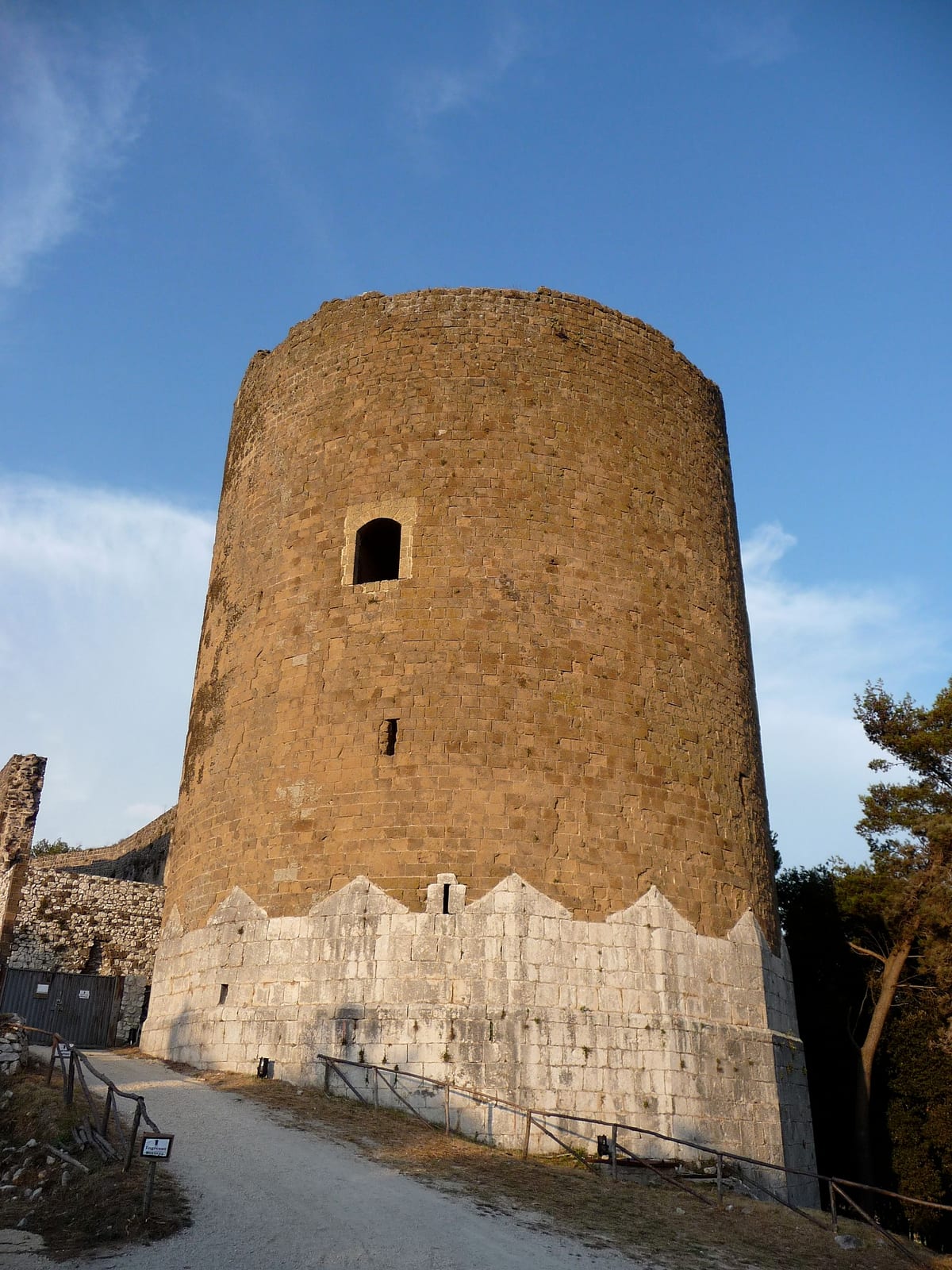
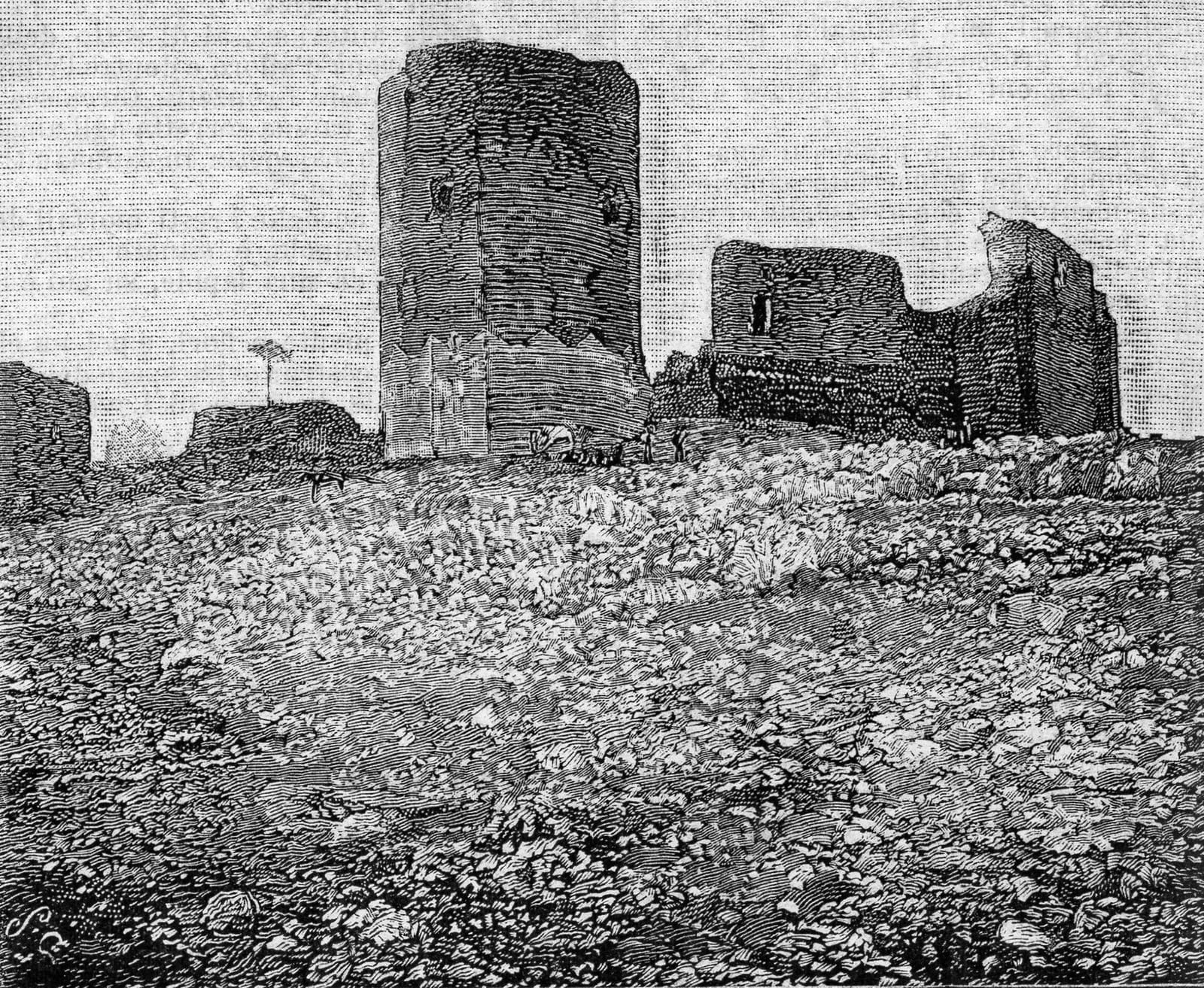
Riccardo grew up at the emperor’s court and married one of his daughters, Violante: Siffridina became related by marriage to Frederick II. It was in those years, around 1239, that her son, very probably, had the round keep of the castle raised, one of the largest of its kind in Europe: the same one you see tonight. In January 1251 the pope, Innocent IV, wrote to her from Lyon and begged her to bring her son back to the side of the Church.
On 27 January the same pontiff wrote to Countess Siffridina, urging her to induce her son to return to loyalty to the Church.

1268–1279
Bread and water
Riccardo died in 1267. Siffridina was old by then, and stood beside her grandson Corrado, who had only just come of age; thanks also to her, and to her dealings with the Curia, the succession passed without a hitch. The following year Conradin, the last of the Swabians, entered the Kingdom to take it back from Charles of Anjou. Corrado put himself at the head of the revolt in Terra di Lavoro. His grandmother stood with him. On 23 August 1268 Conradin lost at Tagliacozzo, and in Naples they cut off his head.
Corrado and Siffridina were promised honourable treatment if they surrendered. They surrendered. In October they were taken to Naples before the king, and the king did not keep his promise. In his registers Charles of Anjou calls her “perfida mulier”, treacherous woman. He had her shut up in the castle of Trani, on the sea, on the other side of the Kingdom, the same castle in which that year he celebrated his wedding; and he ordered that from her own goods she be given nothing but bread and water, until she named those who had counselled the revolt.
She never did. The years passed; the registers speak of two tarì a day for her and for two serving women, and of protests because they did not arrive. She died there, in March 1279. Corrado would stay in prison for thirty-six years. Thus far the documents. From here on, the village speaks.
Two figures of unshakeable Swabian and anti-Angevin faith.

The legend
On winter nights
It is said that of all she had lost, the countess mourned one thing only: this village. And it is said that, after ten years in prison, her spirit made the journey in reverse, from the sea at Trani up to here, to the keep her son had built before her eyes, and that it has never left since.
They look for her between the Cathedral and the ruins of the castle, on winter nights, when the village is empty and there is not a sound. Around midnight, looking at the keep, some say they have seen a shape; some have heard laments, and words in a language no one can make out. No one has ever described her face. We do not ask you to believe it: the keep is there, and the square is a few minutes from this house.
The most faithful subject, who served her imprisonment far from the village she so loved.

Today
The Countess of Casa Hirta
In the village they still speak her name, and not only on winter nights. At “Settembre al Borgo”, the festival that for more than fifty years has filled the lanes with music and theatre, the countess is a recurring character: they call her the Countess of Casa Hirta, by the oldest name of the place, and in 2026 you meet her in the show “Syffridina”, which goes from the castle to Piazza Vescovado, the Cathedral square. The literary festival “Un Borgo di Libri” has chosen her as its patroness, and every year an illustrator reinvents her.
In Trani, where she died, there is another ghost, a young bride named Armida, and local historians think that legend took the place of hers.
Via San Michele
The house that bears her name
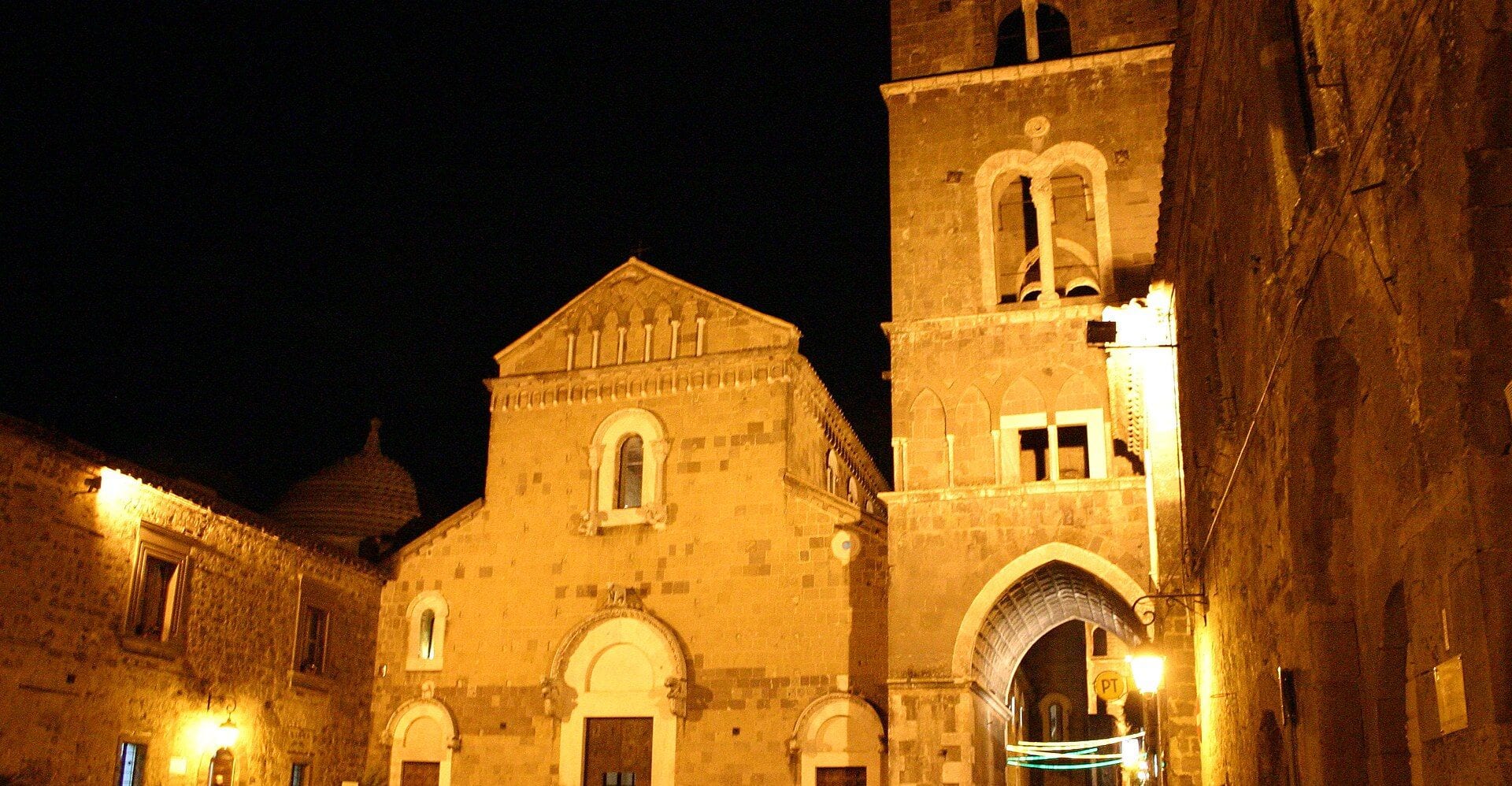
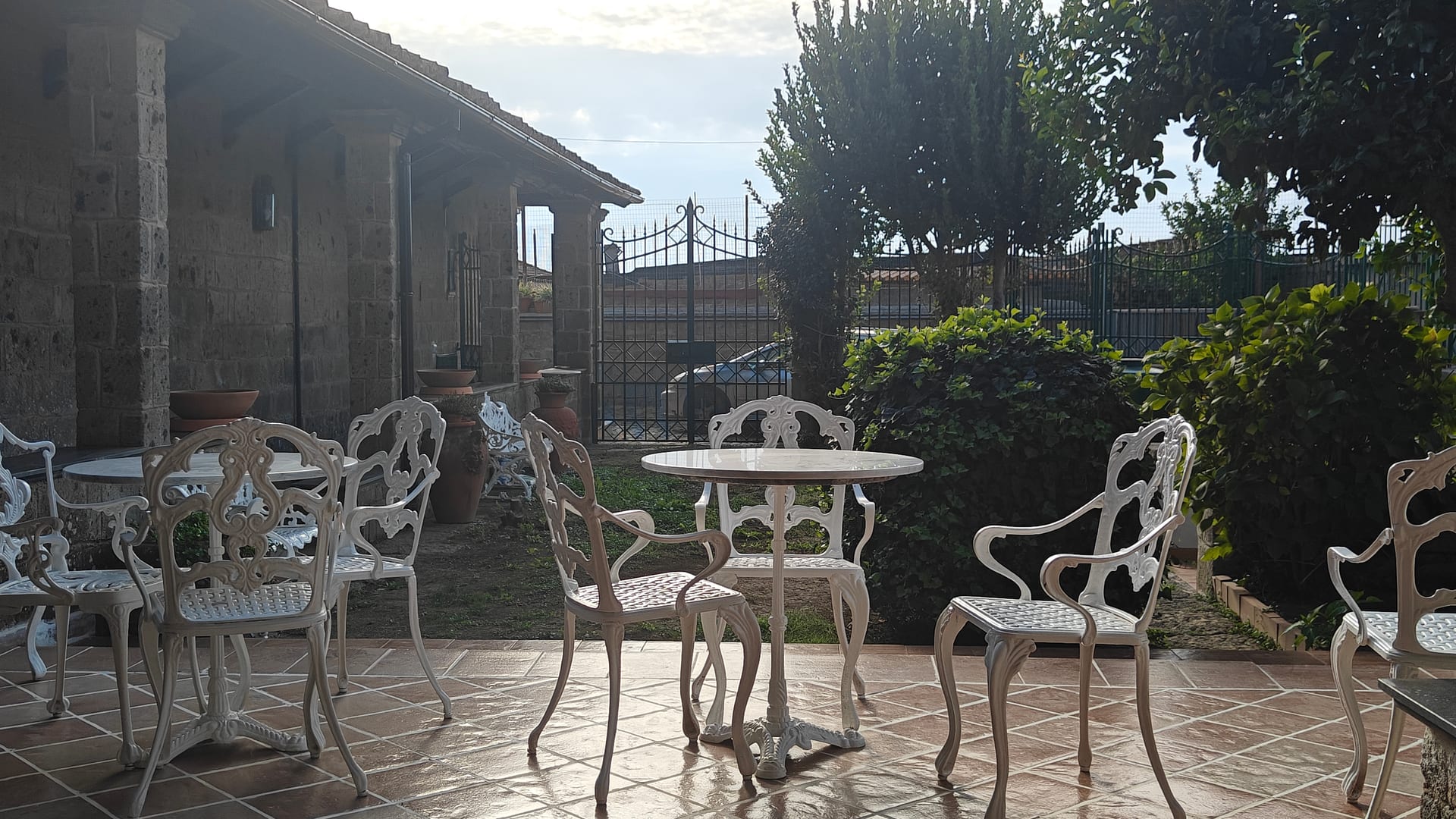
Villa Contessa Siffridina is a former convent in the middle of the village she governed, a few steps from the Cathedral, which in the countess’s day was already seventy years old. The garden with the stone portico was the cloister. From the terrace, in the evening, you can see the lit façade of the Cathedral: the same one before which, on winter nights, tradition looks for her.
The four rooms bear the names of this story: Siffridina, her son Riccardo, her grandson Corrado, and Casa Hirta, the old name of the village. They were not her rooms: they are the rooms of a house that wished to remember her in their names.

Things to do
Going out after dinner
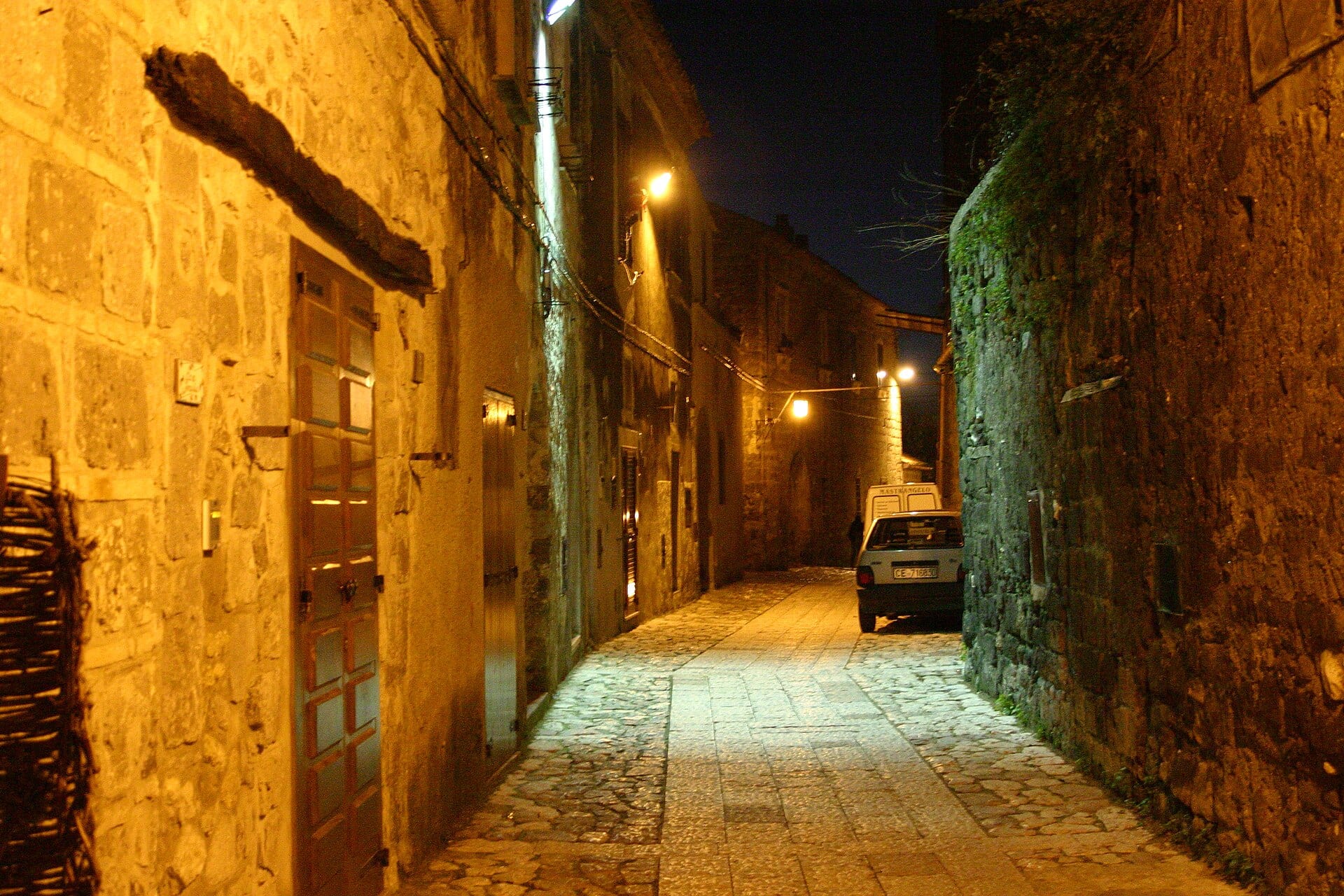
To understand this story you have to go out after dinner, when the village empties. From the house to the Cathedral square it is a few minutes of lanes, and the façade of the Cathedral, which was the cathedral of Caserta until the middle of the nineteenth century, is lit up. From there you climb to the ruins of the castle and the keep. Beyond the keep is the darkness of the valley, with the lights of Caserta in the distance and the Tifatini hills behind you, and you hear nothing more.
You come back by the same lanes. If at midnight, looking at the keep, you think you see a shape, you already know who it is.
Sleeping in the Countess’s house
Four rooms in a former convent, a few steps from the Cathedral. A phone call or an email, and we will reply to you directly.
By writing to us via WhatsApp or email you give us your contact details, which we will use only to reply to your request. WhatsApp is a service of WhatsApp Ireland Ltd. Privacy policy